David Bracamonte

Unraveling the Marketing Specialist Salary: An In-Depth Look

Unraveling the Marketing Specialist Salary: An In-Depth Look

As a marketing specialist, understanding the intricacies of the salary landscape is crucial for both current professionals seeking to advance their careers and those considering entering this dynamic field. This article comprehensively analyzes the factors influencing the average marketing specialist’s salary, particularly emphasizing the growing niche of email marketing salaries.

Delving deep into the data, we will explore the various aspects of entry-level and senior marketing specialist salaries, providing valuable insights and guidance on what you can expect regarding compensation. Additionally, we will touch upon the role of education, experience, location, and company size in shaping these salaries, equipping you with the knowledge to make informed decisions about your career trajectory in the marketing industry.

The Marketing Specialist Salary Range

In marketing specialists, salaries can vary based on numerous factors such as location, education, experience, and job title. The national average marketing specialist salary in the United States ranges between $52,000 and $65,000 per year, with the top average marketing specialist salary being approximately $58,000.

1.1 Entry-Level Marketing Specialist Salary

Entry-level marketing specialists can expect to earn a salary between $40,000 and $50,000 per year national average. This range varies based on factors such as company size and location.

1.2 Senior Marketing Specialist Salaries

For those with more experience, average email marketing and senior marketing specialist salaries can range from $70,000 to $90,000 annually. This higher salary range reflects the additional knowledge and expertise that come with years of experience.

  1. The Email Marketing Specialist Salary Breakdown

2.1 Email Marketing Specialist Salaries

As a subset of marketing specialists, email marketing specialists are responsible for creating and implementing email marketing campaigns. The average email marketing specialist’s salary is slightly higher than the average general marketing specialist’s salary, averaging around $60,000 per person per year.

2.2 Entry-Level Email Marketing Specialist Salary

For those just starting their career in search or email marketing, the entry-level salary ranges between $45,000 and $55,000 annually.

2.3 Senior Email Marketing Specialist Salary

Experienced email marketing support specialists can expect to earn between $75,000 and $95,000 per year, with pay often reflecting their advanced knowledge and expertise in this niche field.

  1. Factors Affecting Marketing Specialist Salaries

Several factors can influence the pay and salary of a marketing specialist job, including:

3.1 Location

Marketing Specialist salaries vary widely by location, with higher salaries typically found in major metropolitan areas like New York and San Francisco. However, the cost of living should also be considered when evaluating salary differences by job title and location.

3.2 Education and Experience

Marketing specialists with a bachelor’s degree or higher, as well as relevant work experience, can typically command higher salaries than average salary those without.

3.3 Company Size and Industry

Larger companies and those in industries with higher demand for marketing and data, and services may offer more jobs and higher salaries to attract top talent.

  1. Total Compensation: Beyond Base Salar

When evaluating marketing specialist salaries, it reports it’s important to consider total compensation, which includes factors such as bonuses, commissions, and benefits. The former says the total compensation for marketing specialists can range from $60,000 to $75,000 annually.

  1. Salary Negotiation: Ensuring Fair Pay

To ensure you’re paid fairly as a sales and marketing specialist, conducting thorough research on average salaries for jobs with your job title, experience level, and location is crucial. Websites like Glassdoor, Salary.com, and Payscale can provide valuable data to help inform your negotiations with employers.

  1. Career Outlook for Marketing Specialists

As companies’ demand for skilled marketing professionals continues to grow, marketing specialists can expect a positive career outlook. Whether you’re pursuing a career as an email marketing specialist, paid search expert, manager, or marketing program specialist, there are ample opportunities for career growth and advancement.

Understanding the marketing specialist salary landscape is essential for both seasoned professionals and those considering a career in this exciting field. Individuals can make strategic decisions regarding their career paths and professional development by staying informed about the factors that influence salaries, such as experience, location, and education. This helps secure a competitive wage and contributes to marketing specialists’ long-term success and satisfaction in their chosen roles.

What is the Pay by Experience Level for Marketing Specialists?

The pay by experience level for marketing specialists can vary significantly depending on the industry, location, and the individual’s skill set. Marketing professionals can generally expect their salaries to increase as they gain more experience in their chosen field. In this section, we will explore how the pay scale evolves for marketing specialists as they progress through various stages of their careers, based on the information discussed in previous sections.

At the entry-level stage, marketing specialists typically have little to no experience and are just beginning their journey in the industry. As mentioned earlier, the entry-level marketing specialist salary ranges between $40,000 and $50,000 annually.

As marketing specialists gain experience and demonstrate success in their roles, they can advance to mid-level positions, where they take on increased responsibility for planning and executing marketing campaigns. At this stage, professionals can expect to see their salaries rise accordingly.

Average marketing specialist salary

The national average marketing specialist salary falls around $58,000 annually, with experienced professionals potentially earning even higher compensation depending on their expertise, industry, and location.

Senior marketing specialists with significant experience and expertise an expect to earn salaries between $70,000 and $90,000 per year. At this level, these professionals are often responsible for leading marketing teams, developing strategic marketing plans, and driving the overall success of their organization’s marketing efforts.

In addition, having a solid grasp of the salary landscape enables marketing professionals to negotiate fair compensation confidently. Using reliable data sources and understanding market trends, they can advocate for themselves and ensure they are adequately compensated for their skills and expertise. This, in turn, fosters a more equitable and rewarding work environment, promoting the overall health and growth of the marketing industry.

Continue Reading

Marketing Strategy: 15 Top-Notch Tips To Attract Customers

Marketing Strategy: 15 Top-Notch Tips To Attract Customers

In the competitive business world, creating a strong marketing strategy is crucial for attracting customers and ensuring the growth of your brand. “Marketing Strategy: 15 Top-Notch Tips To Attract Customers” aims to provide you, with a comprehensive guide, on how to get to know your customers better, create targeted campaigns, and ultimately achieve success in your industry.

Knowing your customer is the foundation of any effective marketing plan. And by understanding their needs, preferences, and behavior, you can create targeted campaigns that drive engagement and increase profits.

In this digital age, companies have access to more customer data than ever before, allowing them to tailor their products and services to meet the specific needs of their audience.

However, access to this data is not enough; businesses must actively work to understand their customers, utilizing tools such as market research, customer analytics, and social media engagement to gain valuable insights into their target audience.

By knowing your customers better, you can create personalized experiences that resonate with them and ensure your brand remains relevant and valuable in the future.

This article will explore 15 effective ways to get to know your customers better, helping you attract new clients and strengthen your customer base. These strategies will enable you to leverage customer data, engage with your audience, and create targeted marketing campaigns that drive results. By implementing these tactics, you can ensure your business’s continued growth and success and build lasting customer relationships.

Marketing Strategy: 15 Top-Notch Tips To Attract Customers

Leverage Google Analytics

Google Analytics is a powerful tool that allows businesses to collect valuable customer behavior and preferences data. By tracking user interactions with your website, you can gain insights into how your customers engage with your content and identify areas for improvement.

The first step in leveraging Google Analytics is to set up your account and add the tracking code to your website. This will enable you to monitor key performance indicators, such as the number of visitors, bounce rate, and conversion rate.

By analyzing this data, you can identify trends and patterns that will help you tailor your marketing efforts to align with your customers’ needs.

Furthermore, you can use Google Analytics to set up custom segments and goals. Allowing you to track specific actions taken by your users, such as signing up for a newsletter or making a purchase. This will help you understand which marketing strategies are most effective in driving conversions and ultimately increasing revenue.

Conduct Market Research

Market research is an essential component of getting to know your customers better.

It involves gathering information about your target audience, their needs, and preferences, which will help you create targeted marketing campaigns that resonate with them.

The first step in conducting market research is to define your target audience. This includes identifying demographic information, such as age, gender, and location, and psychographic factors that drive people, such as interests, values, and lifestyles. This will help you understand your customers and what they want in a product or service.

Next, collect data through various methods, such as surveys, interviews, and focus groups. This will give you a deeper understanding of your customer’s needs and preferences, allowing you to create targeted marketing campaigns that address their pain points.

Finally, analyze your findings and use them to inform your marketing strategy. By understanding your customer’s needs and preferences, for example, you can create tailored campaigns that resonate with them and drive engagement.

Utilize Customer Data

Customer data is a valuable resource that can help you gain insights and insight into your customers’ habits, preferences, and expectations. Collecting and analyzing this data, you can better understand your customers and create personalized experiences that meet their needs.

Start by gathering data from various sources, such as customer analytics, behavioral data, and feedback from surveys or social media interactions. This will give you a comprehensive view of your customers and their preferences.

Next, analyze the data to identify trends and patterns. This will help you understand your customers’ behavior and preferences, allowing you to create targeted marketing campaigns that resonate with them.

Lastly, use the insights gained from your data analysis to inform your marketing strategy and improve your products and services. By understanding your customer’s needs and preferences, you can create personalized experiences that drive engagement and increase customer satisfaction.

Engage on Social Media Channels

Social media channels offer marketers a unique opportunity for businesses to engage with their audience and gain insights into their needs and preferences. You can build rapport with your customers and better understand their needs by actively participating in conversations and responding to comments and messages.

The first step in engaging on social media channels is to identify the most relevant platforms to your target audience. This may include popular platforms such as Facebook, Instagram, and Twitter, as well as niche platforms that cater to specific interests or demographics.

Next, create and share content that resonates with your audience and encourages engagement. This may include blog posts, videos, images, and interactive content like quizzes and polls.

Lastly, actively engage with your audience by responding to comments, answering questions, and participating in discussions. This will help you gain insights into understanding customers’ needs and preferences, allowing you to create targeted marketing campaigns that resonate with them.

Monitor Online Communities

Online communities, such as forums, social media groups, and industry-specific websites, offer valuable insights into your customers’ needs, preferences, and pain points. Participating in these communities, you can better understand your target audience and tailor your marketing efforts accordingly.

First, identify the online communities that are most relevant to your industry and target audience. This may include industry-specific forums, social media groups, or even popular blogs and websites where your audience frequently engages.

Next, actively participate in these communities by discussing, asking questions, and sharing valuable information. This will help you gain insights into your customers’ needs, preferences, and challenges and establish your brand as a knowledgeable and helpful resource.

Lastly, use the information gathered from your participation in online communities to inform your marketing strategy and improve your products or services. By understanding your customers’ pain points and preferences, you can create targeted marketing campaigns that address their needs and drive engagement.

Implement a Loyalty Program

A customer loyalty program effectively rewards repeat business, gathers valuable customer data, and increases customer retention. By offering incentives for continued patronage, you can encourage customer loyalty and gain insights into their preferences and behaviors.

To implement a loyalty program, identify the rewards and incentives that will resonate with your target audience. This may include discounts, exclusive access to new products, brands or services, or redeemable points for merchandise or experiences.

Next, promote your loyalty program through various marketing channels, such as social media, email marketing, and in-store signage. Make it easy for customers to join and participate in the program, ensuring that the benefits are clearly communicated and easily accessible.

Lastly, track the success of your loyalty program by analyzing customer data and engagement metrics. Use this information to refine your program and better understand your customers’ preferences and behaviors, ultimately increasing customer satisfaction and loyalty.

Personalize the Customer Experience

Using customer data and insights to create personalized experiences is essential for ensuring your product or service remains relevant and valuable to your audience. You can drive engagement and increase customer satisfaction by tailoring your marketing efforts and customer interactions to individual customer preferences only.

Start by segmenting your customer base into different groups based on their preferences, behaviors, and demographic information. This will help you target your marketing efforts and create personalized experiences that resonate with each segment.

Next, use customer data to inform your marketing campaigns, product offerings, and customer interactions. This may include personalized email marketing, tailored product recommendations, or targeted promotions based on previous purchases or browsing behavior.

Lastly, monitor the success of your personalization efforts by tracking engagement metrics, such as click-through rates, conversion rates, and customer satisfaction scores. Use this data to refine your personalization strategies and better understand your customers’ needs and preferences.

Encourage Customer Feedback

Collecting customer feedback through surveys, social media, and phone conversations is crucial for improving your products and services. By actively soliciting feedback, you can gain insights into your customers’ needs, preferences, and expectations and use this information to inform your marketing strategy and product development.

First, create various channels for customers to provide feedback, such as online surveys, comment sections on social media platforms, and dedicated phone lines for customer support. Make it easy for customers to share their thoughts and experiences with your brand.

Next, actively encourage customers to provide feedback by promoting these channels through your marketing efforts and customer interactions. This may include sending follow-up emails after a purchase, asking consumers for reviews on social media, or simply inviting customers to share their thoughts during phone conversations.

Lastly, analyze the feedback you receive to identify trends, patterns, and areas for improvement. Use this information to refine your marketing strategy, improve your products and services, and better meet the needs and expectations of your customers.

Utilize Advanced Analytics

Advanced analytics tools can help you process large volumes of customer data, providing deeper insights into your customer base and allowing you to make more informed marketing decisions. By leveraging advanced analytics, you can identify trends, patterns, and opportunities that will help you better understand your customers and tailor your marketing efforts accordingly.

Begin by selecting the appropriate advanced analytics tools for your business. This may include customer analytics platforms, data visualization tools, or predictive analytics software. Ensure that the tools you choose align with your business goals and can effectively process the type of data you collect.

Next, integrate these advanced analytics tools with your existing data sources, such as customer relationship management (CRM) systems, social media platforms, and website analytics. This will allow you to gather and analyze more data points from various sources, providing a more comprehensive understanding of your customers.

Lastly, use the insights gained from advanced analytics to inform your marketing strategy and improve your products and services. By understanding your customers’ preferences, behaviors, and expectations, you can create targeted marketing campaigns that resonate with them and drive engagement.

Collaborate with Business Development Teams

Partnering with your business development team can help you identify new opportunities and prospective customers and tailor your marketing strategy based on market research and customer data. Working closely with business development professionals ensures that your marketing efforts align with your company’s overall growth objectives.

Start by establishing clear communication channels between your marketing and business development teams. This may include regular meetings, shared project management tools, or integrated CRM systems that allow both teams to access and contribute to customer data.

Next, collaborate on market research initiatives, customer segmentation, and lead generation efforts. By combining the expertise of both teams, you can create more targeted marketing campaigns that effectively attract and engage prospective customers.

Lastly, use the insights and opportunities identified through collaboration to inform your marketing strategy and improve your products and services. By working closely with your business development team, you can ensure that your marketing efforts align with your company’s growth objectives and better meet your customers’ needs.

Offer Exclusive Discounts

Attracting new customers and rewarding loyal ones is essential for business growth. One effective way to achieve this is by offering exclusive discounts on your products or services. These discounts can incentivize first-time purchases, encourage repeat business, and create a sense of value for your customers.

First, determine the discounts that will resonate with your target audience. This may include percentage-based discounts, buy-one-get-one-free offers, or limited-time promotions.

Next, promote your exclusive discounts through various marketing channels, such as email marketing, social media advertising, and in-store signage. Ensure that your promotional materials communicate the value of the discount and any necessary terms and conditions.

Lastly, track the success of your discount campaigns by monitoring key performance indicators, such as redemption rates, customer acquisition costs, and overall sales growth. Use this data to refine your discount strategies and better understand your customers’ preferences and expectations.

Host Events

Organizing events, both online and offline, can help showcase your brand, engage with your audience, and create opportunities for networking and relationship-building. Events can include product launches, webinars, workshops, or networking mixers that allow you to connect with your customers more personally.

Begin by identifying the type of event that will resonate with your target audience and align with your marketing objectives. Consider factors such as the size of the event, the location, and the format (in-person, virtual, or hybrid).

Next, plan and promote your event through various marketing channels, including social media, email marketing, and press releases. Ensure that your promotional materials communicate the event’s purpose, the date and time, and any necessary registration information.

Lastly, use the event to engage with your audience, gather feedback and ideas, and build relationships. Hosting successful events can increase brand awareness, generate leads, and create lasting connections with your customers.

Optimize Your Website

Optimizing your website is crucial for providing a seamless customer experience and ensuring that your online presence effectively communicates your brand’s value proposition. A well-designed, user-friendly website can help drive engagement, increase conversions, and improve customer satisfaction.

First, improve your website’s usability by ensuring it is easy to navigate, mobile-friendly, and accessible for users with disabilities. This may include organizing content into clear categories, using responsive design, and incorporating accessibility features such as alt text and keyboard navigation.

Next, optimize your website’s content and design to communicate your brand’s message and value proposition effectively. This effort may include using high-quality images, compelling copy, and clear calls to action that guide users toward desired outcomes, such as purchasing or signing up for a newsletter.

Lastly, monitor your website’s performance and user engagement metrics, such as bounce rate, average session duration, and conversion rate, to identify areas for improvement. Use this data to refine your website’s design and content, ensuring that it continues to meet the needs and expectations of your customers.

Staying up-to-date with industry trends is essential for ensuring that your products and services continue to meet the changing needs of your customers. You can make informed decisions about your marketing strategy and product development by keeping a pulse on market trends, competitor activity, and emerging technologies.

Start by regularly monitoring industry news, publications, and blogs to stay informed about current trends and developments. This may include subscribing to relevant newsletters, following industry influencers on social media, or attending conferences and webinars.

Next, analyze the impact of these trends on your business and customers. Consider how changes in the market, consumer preferences, or technology may affect your company, products, services, or marketing strategies.

Lastly, use this information to inform your marketing and product development efforts, ensuring your business remains relevant and competitive in a constantly evolving market.

Track and Measure Success

Continuously tracking and measuring the success of your marketing campaigns is crucial for understanding your customers and refining your marketing strategies. By analyzing key performance indicators (KPIs) and other metrics, you can identify which campaigns and tactics are most effective in driving engagement and conversions.

First, establish the KPIs and metrics most relevant to your marketing objectives. This may include conversion rate, customer acquisition cost, and return on investment (ROI).

Next, use analytics tools and software to track these metrics across your various marketing channels, such as social media, email marketing, and paid advertising. Ensure your tracking tools are properly set up and integrated with your marketing platforms.

Lastly, analyze the data collected to identify trends, patterns, and areas for improvement. Use this information to refine your marketing strategies, optimize your campaigns, and better understand your customers’ needs and preferences. By continuously tracking and measuring success, you can ensure that your marketing efforts remain effective and aligned with your business objectives.

Knowing your customers is paramount to your marketing efforts’ success and overall growth. By implementing the top-notch strategies discussed in this article, you can gather valuable insights into your customers’ preferences, needs, and expectations. This includes leveraging Google Analytics, conducting market research, utilizing customer data, engaging on social media channels, monitoring online communities, implementing loyalty programs, and personalizing the customer experience, among other tactics.

Furthermore, staying informed on industry trends and customer needs and continuously tracking the success of your marketing campaigns can help you make data-driven decisions that will keep your business relevant and competitive. By understanding your customers and refining your marketing strategies based on their needs, you will be better equipped to attract, engage, and retain a loyal customer base that drives sustainable growth and success for your business.


Continue Reading

The 10 Best Online Courses on Digital Marketing (Free & Paid) 2023

The 10 Best Online Courses on Digital Marketing (Free & Paid) 2023

The digital marketing landscape constantly evolves, and professionals must keep their skills up-to-date to stay competitive in this new digital marketing environment. Online courses are an excellent way for beginners and experienced digital marketers to learn digital marketing, polish their skills, and stay ahead of digital marketing trends. This article will explore The 10 Best Online Courses on Digital Marketing (Free & Paid) 2023, including free and paid options, to help you enhance your digital marketing expertise.

In today’s digital age, the marketing landscape has evolved dramatically. The rise of online platforms and social media has created new opportunities for businesses to connect with their target audience. As a result, the best digital marketing courses have become an essential skill set for anyone looking to enter the industry or grow their business. For beginners, studying digital marketing courses can provide a strong foundation and understanding of the key concepts, tools, and strategies needed to succeed in this highly competitive market. Here are some compelling reasons why studying digital marketing courses is essential for beginners in the industry:

Comprehensive understanding of digital marketing fundamentals:

Digital marketing courses cover various topics, from search engine optimization (SEO) and content marketing to social media and email marketing. These courses provide a thorough understanding of the fundamental principles and best practices in digital marketing, enabling beginners to develop a solid foundation in digital marketing jobs upon which they can build their skills.

The digital marketing landscape constantly evolves, with new platforms, digital tools, technologies, and consumer behaviors emerging regularly. By studying digital marketing courses, beginners can stay informed of the latest trends and best practices, ensuring they remain competitive. This knowledge enables them to adapt their marketing strategies and tactics to the ever-changing digital environment.

Acquiring practical skills:

Digital marketing courses often include hands-on projects and real-world examples, allowing learners to apply the knowledge and skills they’ve acquired in a practical context. This practical experience is invaluable for beginners, enabling them to develop their digital marketing expertise and gain confidence in their abilities.

Enhancing employability:

With the demand for digital marketing professionals growing rapidly, having a strong foundation in digital marketing can significantly improve a beginner’s employability. Employers value candidates who deeply understand digital marketing concepts and can demonstrate practical skills in implementing effective marketing campaigns. Studying digital marketing courses and earning certifications can showcase a beginner digital marketer’s commitment to learning and expertise in the field, making them more attractive to potential employers.

Boosting career growth:

Digital marketing is a dynamic and rapidly growing industry, offering numerous opportunities for career advancement. By acquiring digital marketing skills through studying courses, beginners can position themselves for career growth and take advantage of new opportunities for digital marketing jobs as they arise. This knowledge and expertise can help them secure promotions, transition into new roles, or start digital marketing businesses.

Maximizing marketing ROI:

For small business owners or entrepreneurs, studying digital marketing courses can be particularly beneficial, enabling them to optimize their marketing efforts and maximize their return on investment (ROI). Beginners can develop more efficient and cost-effective online marketing campaigns by effectively targeting their audience, creating engaging content, and leveraging data analytics.

Building a professional network:

Digital marketing courses often provide opportunities to connect with other professionals in the digital marketing industry, whether through online forums, networking events, or social media groups. These connections can be invaluable for beginners, as they can learn from the experiences and insights of others, share ideas, and potentially find new career opportunities.

The 10 Best Online Courses on Digital Marketing (Free & Paid) 2023

1- Google Digital Marketing Courses (Free)

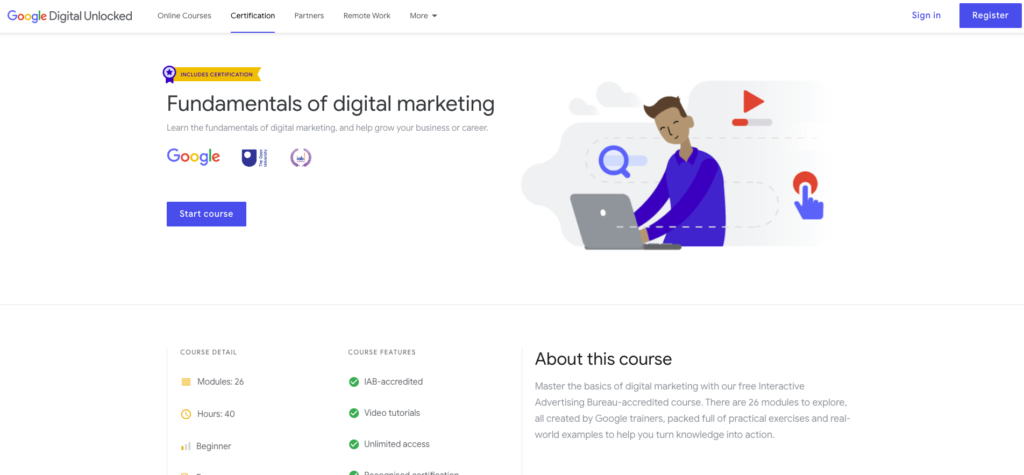
Google offers free digital marketing courses covering important domains like search engine optimization (SEO), Google Ads, and Google Analytics. These courses are designed to provide a strong foundation in digital marketing and are ideal for beginners looking to learn digital marketing fundamentals.

Google digital marketing certification courses.’s free digital marketing courses are an excellent starting point for beginners and professionals looking to strengthen their digital marketing skills. Offered through the Google Digital Garage, these courses are self-paced, allowing learners to study at their convenience. Here’s a closer look at some of the key courses within the Google Digital Marketing suite:

Fundamentals of Digital Marketing courses

This comprehensive course comprises 26 modules and covers essential digital marketing concepts such as online marketing, search engine optimization, and social media marketing. Upon completion, learners receive certification from Google and the Interactive Advertising Bureau Europe, making it a valuable addition to any professional’s resume.

Google Ads Certification

The Google Ads certification is a professional accreditation offered by Google to individuals who demonstrate proficiency in basic and advanced aspects of Google Ads. Six certificates are available, covering topics such as Google Ads Search, Display, Video, Shopping, Apps, and Measurement. Each certification requires passing an assessment, and the certificate is valid for one year.

Google Analytics Individual Qualification (GAIQ)

The GAIQ is a certification offered by Google to those who demonstrate proficiency in Google Analytics. To earn the certification, learners must pass the Google Analytics Individual Qualification exam, which covers various aspects of digital analytics, data collection, and data analysis using Google Analytics.

YouTube Marketing

This course covers the essentials of YouTube marketing, from setting up a YouTube channel to creating engaging video content and optimizing it for search engines. It also discusses the best practices for promoting your videos on YouTube and other social media platforms, making it a valuable resource for those looking to enhance their video marketing skills.

Search Engine Optimization (SEO) Training Course

This course focuses on the best practices for optimizing your website for search engines. It covers key concepts such as keyword research, on-page and off-page SEO, and technical SEO, providing learners with a solid foundation in search engine optimization.

Google My Business

The Google My Business course teaches learners how to optimize their business’s presence on Google Search and Maps. It covers creating and managing a Google My Business listing, optimizing your online business and information, and engaging with customers through reviews and Q&A.

By taking advantage of Google’s free digital marketing courses, learners can build a solid foundation in digital marketing and enhance their skills in various digital marketing domains. These online marketing courses are an excellent way to stay up-to-date with industry best practices and boost your career in the digital marketing field.

2- Coursera’s Digital Marketing Specialization (Paid)

This comprehensive digital marketing specialization from Coursera, created by the University of Illinois, offers a complete digital marketing skillset. The program comprises six courses: social media, internet marketing,, search engine marketing, and digital marketing analytics. Upon completion, learners receive a digital marketing certificate from the university.

3- HubSpot Inbound Marketing Course (Free)

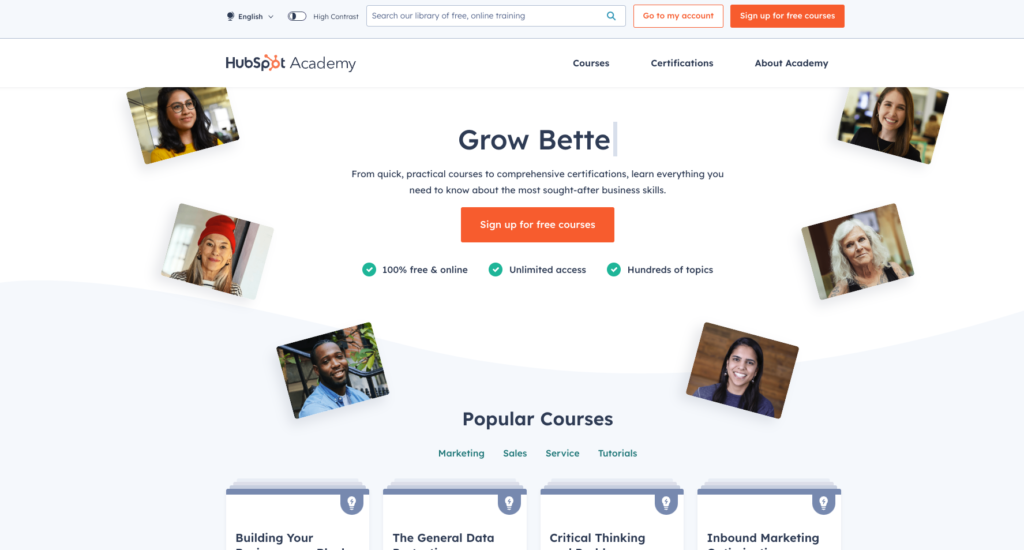
HubSpot offers a free course on inbound marketing, a key component of digital marketing. This course covers content, social media, and email marketing, among other digital marketing disciplines. After completing the course, you can obtain a digital marketing certification from HubSpot.

The HubSpot Inbound Marketing Course is designed to teach inbound marketing fundamentals, focusing on attracting customers through valuable content and experiences tailored to their needs. This free online course covers various aspects of inbound marketing, including content creation, social media promotion, and email marketing. Let’s dive into the course’s key components:

Inbound Marketing Fundamentals

The course begins by introducing the inbound marketing concept and its core principles. It explains how inbound marketing differs from traditional, outbound marketing methods and why it is effective for today’s digital marketing environment.

Content Marketing

In this section, learners will explore the process of creating and promoting valuable content to attract, engage, and convert website visitors into customers. Topics covered include content strategy, creation, and promotion through various digital channels such as Facebook, social media, and email marketing.

Social Media Marketing

This module covers the essentials of social media marketing and its role in inbound marketing. Learners will discover how to build and maintain an effective social media presence on platforms like Facebook, Twitter, LinkedIn, and Instagram. It also discusses best practices for engaging with audiences, creating shareable content, and leveraging social media advertising.

Email Marketing

In the email marketing portion of the course, learners will study the fundamentals of effective email marketing campaigns, including list building, email design, and segmentation. They will also learn about email deliverability, open rates, click-through rates, and other key email marketing metrics.

Conversion Rate Optimization

This section focuses on converting website visitors into leads and customers. Learners will explore techniques for optimizing landing pages, creating effective calls-to-action, and using lead nurturing strategies to guide potential customers through the sales funnel.

Reporting and Analytics

The course’s final module covers measuring and analyzing the results of inbound marketing efforts. Learners will study various metrics and key performance indicators (KPIs) to assess the effectiveness of their inbound marketing strategies and make data-driven decisions.

Upon completing the course, learners can take an exam and earn the HubSpot Inbound Marketing Certification. This certification is widely recognized in the industry and can be a valuable addition to your resume.

4- Simplilearn Digital Marketing Specialist Course (Paid)

Simplilearn’s digital marketing specialist course is designed to help you become a digital marketing expert. It covers essential digital marketing techniques across SEO, social media, content, and email marketing. The course includes real-world projects and access to industry experts, making it a comprehensive online digital marketing training program.

5- Facebook Blueprint (Free)

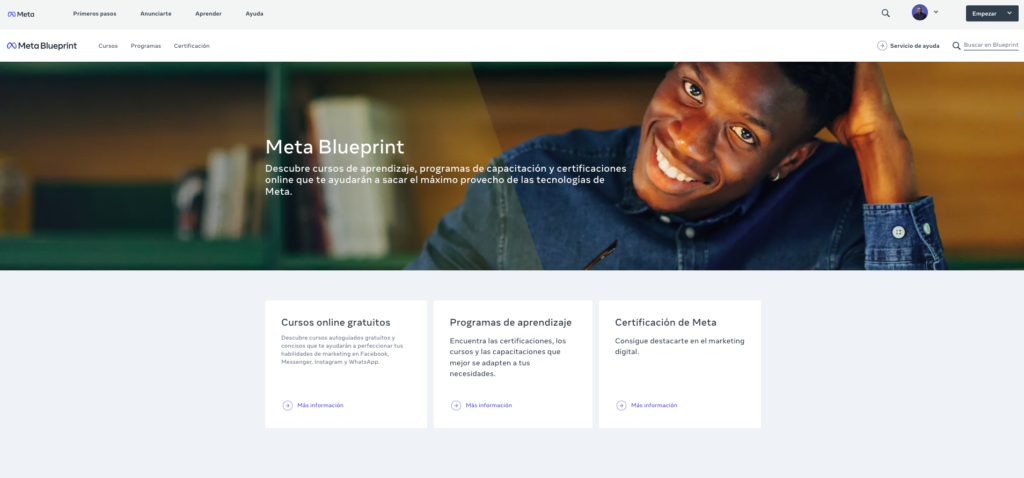
Facebook Blueprint is a free resource offering courses on marketing and advertising. The program covers topics like Facebook Business Manager, Instagram advertising, and Messenger marketing. It is ideal for professionals looking to enhance their social media advertising skills.

Facebook Blueprint is a comprehensive e-learning platform that provides free courses on various aspects of Facebook and Instagram marketing and advertising. The program is designed for marketers, business owners, and anyone looking to improve their social media and online advertising skills. Here’s a closer look at some of the key components of the Facebook Blueprint program:

Facebook Business Manager

This course covers the essentials of Facebook Business Manager, a centralized tool for managing your business’s Facebook and Instagram presence. Learners will explore setting up and navigating Business Manager, managing ad accounts, creating and managing Facebook Pages, and assigning user roles and permissions.

Facebook Ads

The Facebook Ads courses within the Blueprint program cover a wide range of topics related to creating, managing, and optimizing Facebook advertising campaigns. Learners will discover different ad formats, targeting options, bidding strategies, and measurement tools. They’ll also learn about best practices for creating engaging ad creatives, writing effective ad copy, and optimizing campaigns for better performance.

Instagram Advertising

These courses focus on leveraging Instagram as a powerful advertising platform. Learners will study the fundamentals of Instagram ads, including ad formats, targeting, and creative best practices. They’ll also learn about the differences between Facebook and Instagram advertising and how to create effective, visually appealing ads for Instagram.

Messenger Marketing

The Messenger Marketing courses within Facebook Blueprint teach learners how to use Facebook Messenger as a marketing and customer engagement tool. Topics covered include creating and managing Messenger bots, using sponsored messages for advertising, and leveraging Messenger for customer support.

Facebook Analytics

This program section covers the essentials of Facebook Analytics, a powerful tool for measuring the performance of your Facebook and Instagram advertising campaigns. Learners will explore key metrics, custom reporting, and advanced features like audience insights and funnel analysis.

Facebook for Local Businesses

These courses focus on using Facebook to drive local business growth. Learners will discover strategies for increasing foot traffic, reaching local audiences, and using Facebook’s local marketing tools like local awareness ads and store visits optimization.

6- Udemy Digital Marketing Courses (Paid)

Udemy offers paid online digital marketing courses covering SEO, YouTube, and social media marketing. These courses are taught by experienced digital marketers and provide real-world examples, making them a great choice for online digital marketing training.

7- LinkedIn Learning (Paid)

LinkedIn Learning provides various digital marketing courses, including content marketing, web analytics, and marketing automation. These courses are designed to help professionals develop digital marketing skills, and many offer digital marketing certifications upon completion.

8- edX Digital Marketing Courses (Free & Paid)

edX offers free and paid digital marketing courses from top universities and institutions. The platform covers various topics, including digital marketing, digital strategy, data analytics, and mobile marketing. edX courses are ideal for professionals looking to gain digital marketing expertise at their own pace.

9- SEMrush Academy (Free)

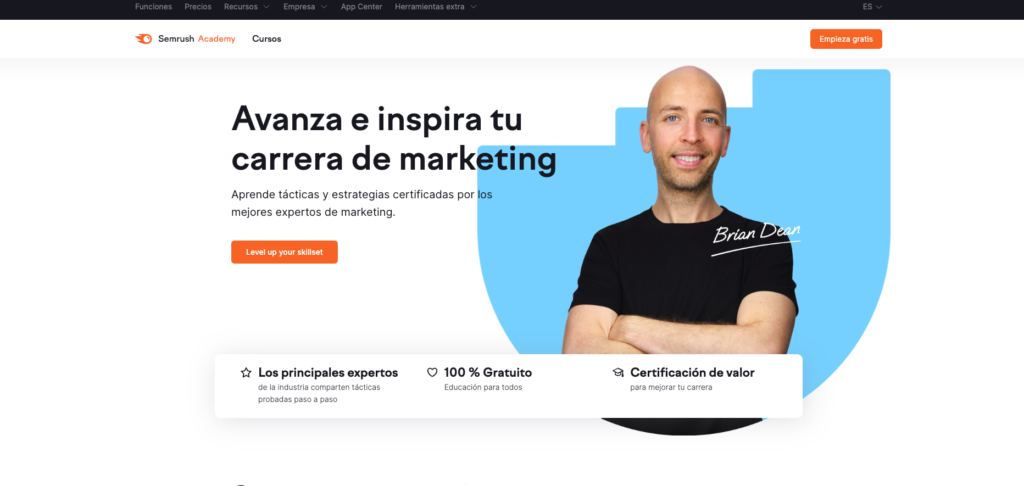
SEMrush Academy offers free courses in SEO, content, and digital marketing analytics. The platform is perfect for professionals looking to improve their search engine optimization and digital analytics skills.

SEMrush Academy is a free e-learning platform that provides a wide range of SEO, content marketing, and digital marketing analytics courses. Powered by the popular SEMrush suite of marketing tools, the Academy is designed for professionals who want to enhance their search engine optimization and digital analytics skills. Here’s an overview of the key courses offered by SEMrush Academy:

SEO Fundamentals Course

This course introduces learners to the core concepts of search engine optimization. It covers essential topics like keyword research, on-page optimization, technical SEO, link building, and local SEO. The course provides a strong foundation in SEO principles and best practices.

Technical SEO Course

The Technical SEO Course dives deeper into the technical aspects of search engine optimization, focusing on website crawling, indexing, site architecture, and site speed optimization. The course aims to help learners identify and fix technical issues affecting their website’s search engine performance.

Content Marketing Course

This course covers the essentials of content marketing, including content strategy development, content creation, and content promotion. Learners will explore various content formats, such as blog posts, videos, infographics, and social media content, and discover best practices for creating engaging, shareable content that drives traffic and conversions.

Digital Marketing Analytics Course

The Digital Marketing Analytics Course teaches learners how to use data and analytics to measure the success of their digital marketing efforts. Topics covered include web analytics, social media analytics, and email marketing analytics. The course also covers using SEMrush’s analytics tools to gain insights into website performance and competitor analysis.

PPC Fundamentals Course

This course focuses on the basics of pay-per-click (PPC) advertising, including Google Ads and Bing Ads. Learners will study campaign setup, keyword research, ad copywriting, and bid management. The course also covers best practices for optimizing ad campaigns to improve performance and maximize ROI.

SEMrush Toolkit Course

The SEMrush Toolkit Course provides an in-depth overview of the SEMrush platform and its various tools for SEO, PPC, content marketing, and social media marketing. Learners will discover how to use SEMrush’s features to research keywords, track website rankings, analyze backlinks, and more.

Upon completing the courses, learners can take exams and earn SEMrush certifications, which can be a valuable addition to their professional credentials.

10- The Interactive Advertising Bureau Europe (IAB) Digital Marketing Certification (Paid)

The IAB offers a comprehensive digital marketing certification program that covers essential digital marketing concepts, techniques, and best practices. Upon completion, learners receive a digital marketing certificate recognized by the industry.

Whether a beginner or an experienced digital marketing consultant or professional, the right online course digital marketing program can help you expand your knowledge and boost your career. Choose from the wide array of free and paid options, and start.

The digital marketing industry presents many opportunities for professionals, entrepreneurs, and businesses. As the landscape continues to evolve, acquiring a solid foundation in digital marketing through high-quality online courses is essential for success. These courses offer comprehensive knowledge, practical skills, and industry insights, informing learners about the latest trends and best practices. By investing time and effort in digital marketing education, beginners can enhance their employability, boost their career growth, and maximize their marketing ROI. Ultimately, studying digital marketing courses equips individuals with the necessary tools and expertise to thrive in this dynamic and competitive industry.

Continue Reading

Marketing vs. Advertising: What’s the Difference and Why It Matters

Marketing vs. Advertising: What’s the Difference and Why It Matters

Many people use Marketing vs. Advertising interchangeably, but they are different. Marketing is a broad process that involves understanding your customers, creating a strategy to reach them, and delivering value. Advertising is a specific tactic that, for advertisers and marketers, involves promoting your products or services through paid channels, such as TV, radio, print advertising, online, or social media.

Marketing and advertising have different goals, methods, costs, and measurements of success. Knowing the difference between them can help you plan your marketing department’s advertising strategy and campaigns more effectively and optimize your budget and resources.

This article will explain the main differences between marketing and other advertising strategies, the marketing mix, and why they matter for your business.

The Goal of Marketing Strategy

The ultimate goal of marketing is to generate demand for your products or services and build long-term relationships with your customers. Marketing helps you communicate your brand identity, values, benefits, and solutions to your target audience. It and marketing investments also help you and sales managers create loyal customers who trust and advocate for you.

To achieve this goal, a marketing plan involves four main elements of sales strategy: product, price, place, and promotion (also known as the 4Ps of marketing). These elements help you define what you are offering (product), how much you are charging (price), where you are selling it (place), and how you are spreading the word about it (promotion).

  • Product refers to the goods or services you provide to satisfy customer needs or wants. Your product should have unique features or benefits that make it stand out from competitors and appeal to your customer’s online target market.
  • Price refers to the amount you charge for your product or service. Your price should reflect the value you offer and match the willingness and ability of your customers to pay. When setting your price, you should consider factors such as production costs, market demand, competition, or distribution channels.
  • Place refers to the locations or channels where you distribute or sell your product or service. Your site should be convenient and accessible for your customers and match their preferences or habits. When choosing your marketing manager and place, you and the marketing team should consider logistics, inventory, or transportation factors.
  • Promotion refers to the activities or methods you use to communicate with customers or prospects about your product or service. Your advertising should inform, persuade, or remind them of the value that you offer and encourage them to take action. You can use various tools for promotion, such as marketing activities such as advertising, public relations, sales promotion, personal selling, or even direct mail and marketing.

The Goal of Advertising campaign

Advertising and marketing initiatives aim to increase awareness of your products or services and persuade potential customers to buy from you. Advertising helps you do market research and reach many people who may not be aware of your brand or offer. It also helps you create a positive image of your brand and differentiate yourself from competitors.

To achieve this goal, advertising, and digital marketing involves choosing the right channels (such as TV, radio, print ads, online or social media), creating compelling messages (such as slogans, headlines, images, videos, or testimonials), and allocating a budget for each channel.

Channels refer to the media platforms where you display or broadcast your ads. Your channels should match the characteristics and preferences of your target audiences or audience and fit with your message and objectives.

When selecting your channels, you should also consider reach, frequency, cost, or impact factors. 

Messages are the content or information you convey through ads, emails, and marketing materials. Your messages should capture attention, interest, desire, and action (also known as the AIDA model) from potential customers.

When crafting your messages, you should also consider factors such as clarity of advertising messages, relevance, creativity, or credibility.

Budget refers to how much money you spend on each channel or marketing campaign. Your budget should be based on realistic goals and return on investment (ROI) expectations. When allocating your budget, you should also consider factors such as market size, competition level, timing, or seasonality.

The Cost of Marketing vs. Advertising

Marketing can be more cost-effective than advertising in the long run because it focuses marketing efforts on building customer relationships rather than just selling to them. Marketing can also generate organic traffic (such as word-of-mouth referrals, reviews, or social media shares) that does not advertising agencies does not require additional spending.

However, marketing can also be very involved. Marketing can also be more time-consuming and complex than advertising because it requires research, analysis, planning, and execution of multiple marketing strategies and tactics.

Advertising can be more expensive than marketing because it requires paying for media space or time to have paid ad campaign reach a large audience. Advertising can also have a shorter lifespan than marketing because it depends on the frequency and duration of the ads. However, advertising can also be more immediate and measurable than marketing because it can generate instant results and feedback.

How to Measure Marketing vs. Advertising Success

Marketing success can be measured by various metrics that reflect customer relationship management, satisfaction and loyalty, and consumer behavior, such as customer retention rate, net promoter score, customer lifetime value, or customer advocacy rate. These metrics indicate how well you meet customer needs and expectations and how likely they are to stay with you or recommend you to others.

Advertising success can be measured by various metrics that reflect customer awareness and action from digital advertising, such as impressions, reach, clicks, conversions, or return on ad spend. These metrics indicate how well you and native advertising reach potential customers and persuade them to buy from you or take another desired action.

Marketing and advertising are essential tools for any business wanting to grow its customer base and revenue. However, they have different purposes for both marketing and advertising teams, methods, costs,

and measurements of success. Understanding their differences can help you create more effective advertising campaigns that align with your goals and budget.

Continue Reading

how to become a digital freelancer.

How to become a digital freelancer

Hi! In this article, I will guide you to becoming a “digital freelancer.” I’ll talk about what a digital marketing freelancer is, how to get clients, and some tips to succeed in this career.

What is a digital freelancer?

A digital marketing consultant or freelancer is an independent professional who works on various digital marketing projects. They can work from anywhere as long as they have an internet connection. Some of the services that digital marketing freelancers offer include social media content creation, web design, online advertising, search engine optimization (SEO), and email marketing.

They typically work on a project-by-project basis for different clients rather than being employed full-time by a single company. The ability to work remotely and take on a variety of projects is one of the many advantages of being a digital freelancer.

Digital freelancers are often sought after by businesses and organizations who need specific digital marketing services but may not have the resources or expertise to handle them in-house. By hiring a digital freelancer, these businesses can save time and money while still receiving high-quality work. Digital freelancers can also offer a fresh perspective on freelance digital marketing jobs and bring new ideas to a company’s digital marketing efforts.

Working on being your boss and terms is one of the digital freelancers’ biggest advantages. You can choose the projects you want, set your rates, and work from anywhere worldwide. However, this also means that you are responsible for finding clients, managing your time and workload, and handling all aspects of your business.

To succeed as a digital marketing analytics freelancer, you must have a combination of technical, business, and soft skills. This includes knowledge of digital marketing tools and techniques, project management, communication, and problem-solving skills. Having a strong work ethic and managing your time effectively is also important.

What does a freelance marketing professional do?

Sure! A freelance marketing professional is someone who works independently in the field of marketing. Generally, their responsibilities include helping businesses promote their products and services by creating effective advertising, digital marketing campaigns, and solid marketing strategies. This can involve market research, data analysis, content writing and development, and graphic design.

In addition, freelance marketing professionals may advise clients on improving their online presence and increasing their reach on social media. They may also collaborate with other creative professionals to create advertising materials for digital marketing channels, such as promotional videos, paid ads, graphic ads, and mass emails.

Other activities that a freelance marketing professional may engage in include:

  • Conducting competitive analysis to identify strengths and weaknesses of competitors
  • Developing buyer personas to understand target audience demographics
  • Creating SEO-friendly website copy to improve search engine rankings
  • Managing social media accounts and developing social media strategies
  • Tracking campaign performance using analytics tools
  • Providing regular reports on campaign performance to clients

A freelance marketing professional is an expert in marketing through digital channels, helping businesses connect with their target audience and increase sales through effective marketing techniques.

What skills does a digital freelancer need?

To be a successful digital freelancer, you must have several skills to complete projects efficiently and effectively. Here are some skills needed to succeed as a freelance marketing consultant before you become a freelance digital freelancer:

Digital marketing skills: it is essential to have digital marketing skills to provide quality services to your clients. These specialty digital marketing skills include SEO, online advertising, email marketing, content marketing, social media marketing, and data analytics.

Project management skills: project management skills are necessary to meet agreed deadlines and ensure that projects align with client objectives. Some essential business skills are project planning, organizing, budgeting, and tracking.

Communication skills: clear and effective communication with the client is essential to succeed as a digital freelancer. You must be able to convey ideas clearly and persuasively, whether by email, phone, or in person.

Organizational skills: working as a digital freelancer requires a lot of organization and planning, from tracking tasks to managing documents and files. It is essential to have organizational skills to complete projects efficiently.

Problem-solving skills: problems can arise at any time during a project, and a digital freelancer must be able to identify them quickly and find practical solutions.

Creativity skills: creativity is fundamental to digital marketing design and content creation. Being able to think outside the box and create engaging and compelling content for the whole client base is essential.

How to get clients for digital marketing?

Getting clients is essential for any freelancer, and a freelance digital marketing business is no exception. Here are some ways to find clients for your digital marketing services:

Social media: social media is a powerful tool for finding clients. Create professional profiles on social media platforms and share content related to your services so potential clients can see you.

Freelancer marketplaces: many websites connect freelancers with clients looking for digital marketing services, such as Upwork, Freelancer, and Fiverr.

Networking: participate in digital marketing-related events and conferences to meet other digital marketing professionals in your field and potential clients.

Referrals: ask you’re satisfied clients to refer you to friends and colleagues who need digital marketing services.

Tips for success as a digital freelancer

Specialize in one area: instead of trying to be good at everything, focus on a specific specialty in the digital marketing industry, such as SEO or online advertising.

Build a strong portfolio: a portfolio of past work can go a long way in convincing clients that you are the right person for the job.

Maintain clear communication with your clients: ensure they understand the work process and what they can expect from you.

Deliver on time: meet agreed deadlines to build a good reputation and keep your clients happy.

Set fair prices: research the rates charged by other freelancers in your area and set reasonable and competitive prices.

Constantly update your digital marketing knowledge: digital marketing strategy is continuously changing, make sure you are up to date with the latest trends and tools.

Take care of digital marketing resources for your brand: work on your online presence and make your brand stand out in the market.

How to set your prices as a digital freelancer

Pricing is a crucial aspect of a digital freelancer’s career, as it determines how much you will earn for your work and how it compares to other freelancers in the market. Here are some tips for setting your prices fairly and competitively:

Research market pricing: before setting your prices, research how much other freelancers in your area and specialty charge. This will give you an idea of typical prices in the market and help you set your prices fairly and competitively.

Consider your specialization: if you have expertise in a particular area, such as SEO or online advertising, you may be able to charge more than other freelancers who offer more general services. Take your specialization into account when setting your pricing.

Consider the complexity of the project: larger or more complex projects may require more time and effort on your part. Be sure to set your prices according to the complexity of the project.

Look at your experience: if you are new to the industry, you may need to lower your prices to attract clients and build a solid portfolio. As you gain more experience and credibility, you can increase your costs.

Don’t undervalue yourself: it is important to set prices at a reasonable price, as this can lead you to overwork yourself and not earn enough to cover your expenses. Set prices that allow you to earn what you need to live comfortably.

Offer package pricing: Instead of setting hourly rates, consider offering packages that include specific services. This may attract clients and allow you to charge higher rates.

The essential tools for a digital freelancer

Digital marketing requires many tools to complete projects. As a freelance digital marketer or freelancer, having an arsenal of essential tools to improve your efficiency and quality of work is important. Here are some of the tools every successful freelance digital marketer or freelancer should have:

Data analysis tools: Google Analytics is essential for analyzing your website and traffic, while SEMrush helps explore your site’s SEO strategies and those of your competitors.

Graphic design tools: Adobe Creative Cloud is the most popular and valuable set of design tools for creating graphics,

illustrations, and website designs. Other popular graphic design tools include Canva, PicMonkey, and Inkscape.

Marketing automation tools: you can use tools like HubSpot or Marketo to automate your marketing strategies, saving time and effort.

Project management tools: Trello and Asana are valuable tools for managing projects and tasks and tracking deadlines and goals.

Collaboration tools: Slack is valuable for collaborating with other team members or clients in real-time, while Zoom is helpful for online meetings and video calls.

Email tools: Mailchimp is a popular tool for creating and sending newsletters and marketing emails.

Social media scheduling tools: Hootsuite and Buffer are valuable tools for scheduling social media posts and analyzing the performance of your posts.

Keyword research: Using keyword research tools to make search engine marketing find the right keywords for your marketing campaigns is important.

Successful digital freelancers require digital marketing skills, project management, communication, creativity and organization, technical tools, and knowledge. By focusing on specialization, building a solid portfolio, setting fair prices, and using valuable devices, you can create a successful and rewarding digital freelance marketing career in the digital marketing world.

Pros and Cons of Freelance Digital Marketing

Here are some pros and cons of freelance digital marketing services:

Pros:

  1. Flexibility: Freelance digital marketers can work on their terms and schedules, which can be ideal for those who need to balance work with other commitments.
  2. Variety: Freelancers often work with various clients in different industries, which can provide exposure to diverse projects and challenges.
  3. Autonomy: Freelance digital marketers have more autonomy over their work and creative decisions, allowing them to take ownership of their projects.
  4. Higher earning potential: Since freelancers can set their rates and negotiate contracts directly with clients, there is potential to earn more than in traditional salaried positions.

Cons:

  1. Inconsistent income: Freelance work can be unpredictable, with fluctuations in workload and payment depending on client demand.
  2. Self-employment taxes: As independent contractors, freelance digital marketers are responsible for paying self-employment taxes, which can be higher than traditional payroll taxes.
  3. Limited benefits: Unlike salaried employees, freelancers do not typically receive benefits such as health insurance or retirement plans from their clients.
  4. Constant self-promotion: Freelancers must constantly market themselves and seek out new clients to maintain a steady stream of work.

Overall, the whole freelance marketing career can offer many advantages but requires careful consideration of the potential downsides before pursuing it as a career path.

BONUS: Useful Tools and Resources for Freelance Digital Marketing

Many tools and resources are available to freelance and digital marketers to help them be more efficient and effective in their work. Here are a few useful ones:

  1. Google Analytics: This free tool provides valuable insights into website traffic, user behavior, and conversions. It can help freelance digital marketers understand their clients’ audiences and optimize their campaigns accordingly.
  2. Hootsuite: This tool allows freelance digital marketers to manage multiple social media accounts from one dashboard. It can help them schedule posts, monitor social media conversations, and analyze social media metrics.
  3. Canva: This user-friendly graphic design tool allows freelance digital marketers to create high-quality visuals for their client’s marketing campaigns. It offers a wide range of templates, images, and design elements.
  4. SEMrush: This powerful SEO and PPC tool can help freelance digital marketers optimize their clients’ websites for search engines. It offers keyword research, site audit, and backlink analysis features.
  5. Trello: This project management tool can help freelance digital marketers organize tasks and collaborate with clients and team members. It offers features such as task boards, checklists, and team communication.
  6. HubSpot Academy: This free online training platform offers courses on various digital marketing topics. It can help freelance digital marketers improve their skills and stay up-to-date with industry trends.
  7. Upwork: This popular freelancing platform connects freelance digital marketers with clients worldwide. It offers various marketing-related projects, from content creation to social media management.

Do I have to pay taxes if I work as a marketing freelancer?

If you work as a freelance or digital marketer here, you will likely be legally considered a freelancer or self-employed. As such, you are responsible for declaring your income and paying taxes. Depending on your country, this may include federal, state, or provincial taxes, social security taxes, and other fees.

To meet your tax obligations as a freelance marketer, you must keep detailed records of your income and expenses and know what tax deductions you can take. In addition, it is recommended that you consult with an accountant or tax professional to ensure that you are filing your taxes correctly and taking full advantage of any tax benefits available to you.

If you are a freelancer in the United States and are considering starting a freelance business here, several options may be right for you. Here are some of the most common options:

Sole Proprietorship: This is a simple and inexpensive option, as it does not require the registration of a separate legal entity. As a sole proprietor, you are responsible for all obligations and debts of the business, and your income is reported on your tax return.

LLC (Limited Liability Company): An LLC is a separate legal entity that offers you personal protection against the debts and liabilities of the business. As an LLC owner, your income and losses are reported on your tax return. This type of entity also offers flexibility in how profits are distributed.

S-Corporation: An S-Corporation is another option that allows you to create a separate legal entity that offers personal protection against business debts and liabilities. However, with an S-Corporation, the business’s income and losses are reported on an individual tax return, and the business owners receive a distribution of profits as salary and dividends.

Continue Reading